Rule of Fifths Face Test
Is your face five eyes wide?
Drag & drop a photo here
Front-facing · eye level · neutral face · good light
Measured in your browser — your photo never leaves your device
Same photo, same score — measured, not guessed.
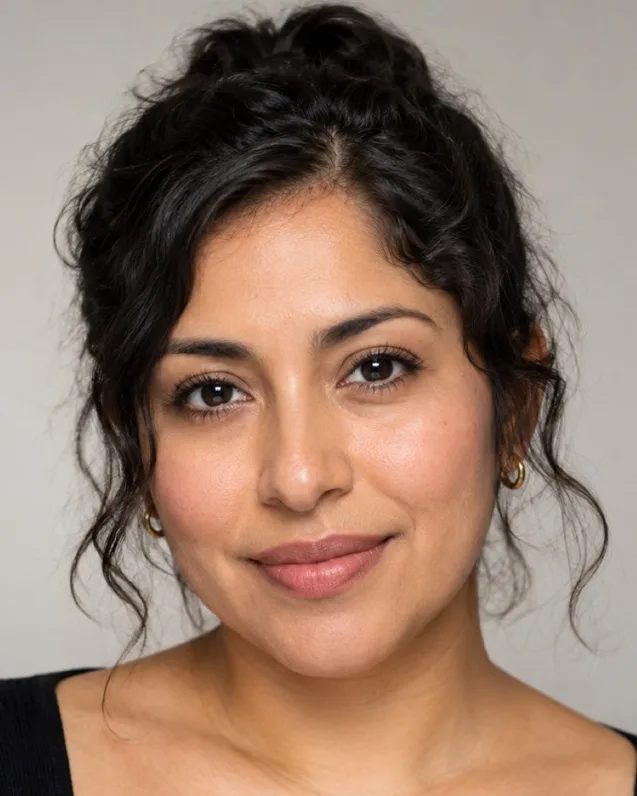
AI-generated sample face · real measurements
Sample result
average gap from an even 20% split
2.6%
Uneven fifths- Right side14.9%
- Right eye20.2%
- Between eyes25%
- Left eye21.2%
- Left side18.7%
For adults 18+, for entertainment and self-improvement. Scores reflect geometry in one photo, not your worth. Terms
How it works
- 1Upload a photoA straight-on photo at eye level, neutral face, good light. Or take a selfie.
- 2We measure in your browser478 landmarks are mapped on your device and small head turns are corrected. The photo is never uploaded.
- 3Get your rule of fifths face resultSee the numbers with the lines drawn on your photo. Same photo, same result, every time.
The rule of fifths says a balanced face is five eye-widths across. This test measures the five vertical strips at your face edges and eye corners, shows each as a percentage of face width and reports the average gap from an even 20% split.
What is the rule of fifths?
The rule of fifths divides the face vertically into five equal strips, each about one eye-width across: from the side of the face to the outer corner of the right eye, the right eye itself, the gap between the eyes, the left eye, and from the outer corner of the left eye to the side of the face. On an evenly proportioned face, each strip is 20% of the face width.
How the rule of fifths test works
The test finds the face edges at the cheekbones and the inner and outer corners of both eyes, levels your head, and measures each of the five strips as a percentage of face width. It reports each strip and the average gap from an even 20% split: an average gap of 2% or less is shown as close to ideal fifths. The lines are drawn on your photo, so you can see which strip is wider or narrower.
What uneven fifths mean
- Wide centre strip — wide-set eyes, a common and often attractive trait.
- Narrow centre strip — close-set eyes; makeup that brightens the inner corners balances it.
- Wide outer strips — a broad face relative to the eyes, often with strong cheekbones.
- Unequal left and right — usually a turned head; take a straight-on photo before reading into it.
For eye spacing on its own, see the eye shape detector; for vertical balance, the facial thirds test.
Rule of fifths vs facial thirds
The rule of fifths measures horizontal balance — how width is shared between the eyes and the sides of the face. The facial thirds measure vertical balance — how height is shared between forehead, midface and lower face. Proportion guides use both together: a face can have perfect fifths and a long lower third, or the reverse. Both are part of the proportions and thirds areas of the attractiveness test. Head turn is the main error for fifths, since it makes one side strip wider, so the test corrects small turns and flags larger ones.
Frequently asked questions
What is the rule of fifths for the face?
It says a balanced face is five eye-widths wide: the two outer strips, the two eyes and the gap between them should each be about 20% of the face width.
What is a good rule of fifths result?
An average gap of 2% or less from an even 20% split is shown as close to ideal fifths. Larger gaps usually come from wide-set or close-set eyes or a broad face, which are normal variations.
Will the same photo always get the same score?
Yes. Your score is calculated from fixed measurements with a fixed formula, not guessed by a chatbot, so the same photo always returns the same result. Different photos can differ because angle, distance, expression and lens change where your features appear.